EO Capacity Building Needs Evolve in a Changing World
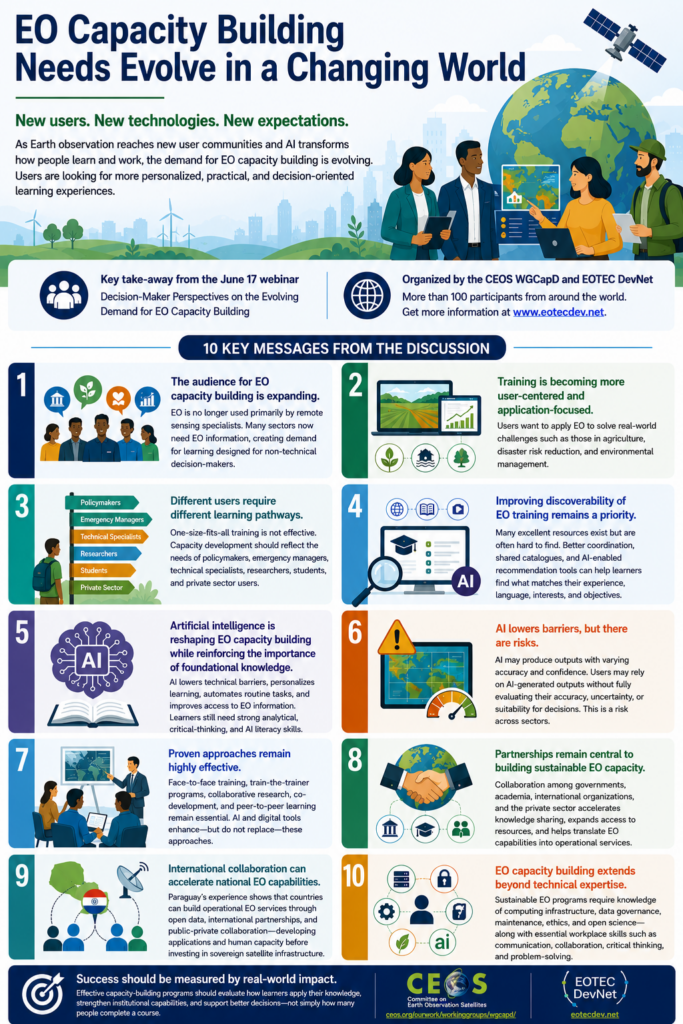
As Earth observation reaches new user communities and AI transforms how people learn and work, the expectations for EO capacity building are evolving, with users looking for more personalized, practical, and decision-oriented learning experiences.
This was a key take-away of the June 17 webinar, Decision-Maker Perspectives on the Evolving Demand for EO Capacity Building, jointly organized by the CEOS Working Group on Capacity Building and Data Democracy (WGCapD) and EOTEC DevNet.
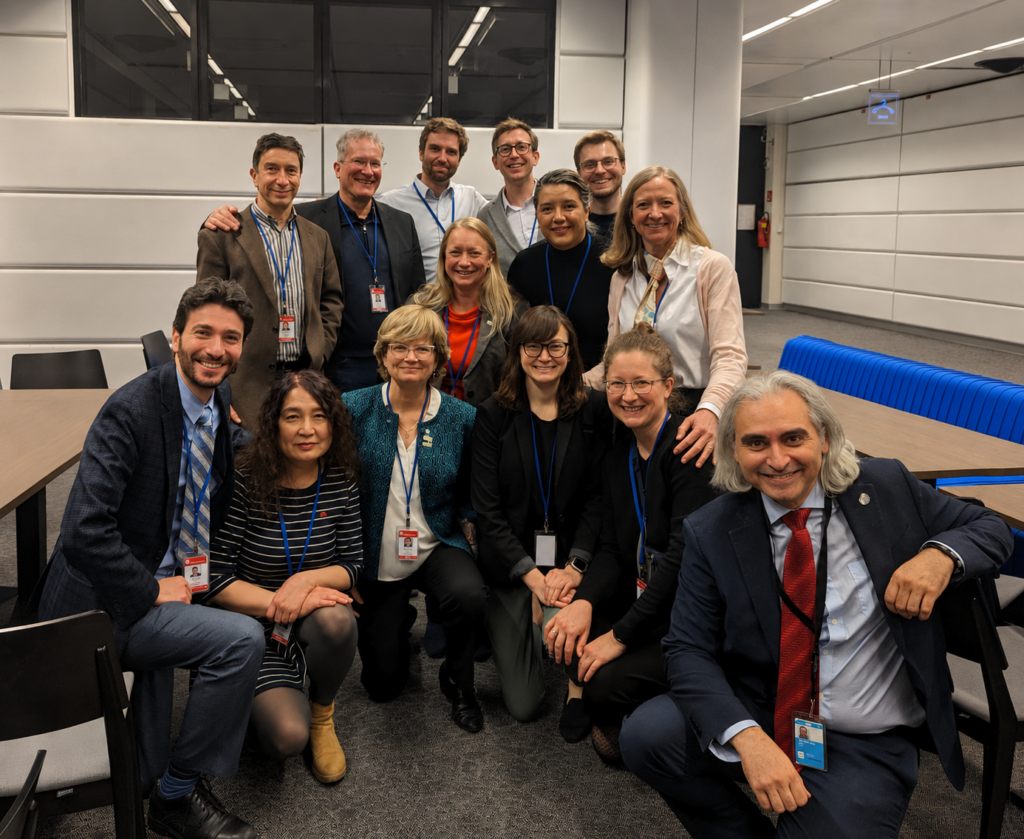
More than 100 participants from around the world joined the discussion, bringing together perspectives from government, the private sector, and capacity development providers. The session explored how demand for Earth observation (EO) capacity building is changing in response to expanding user communities, advances in artificial intelligence (AI), and evolving workforce needs.
Webinar Resources
Key Messages
These key messages emerged from the discussion:
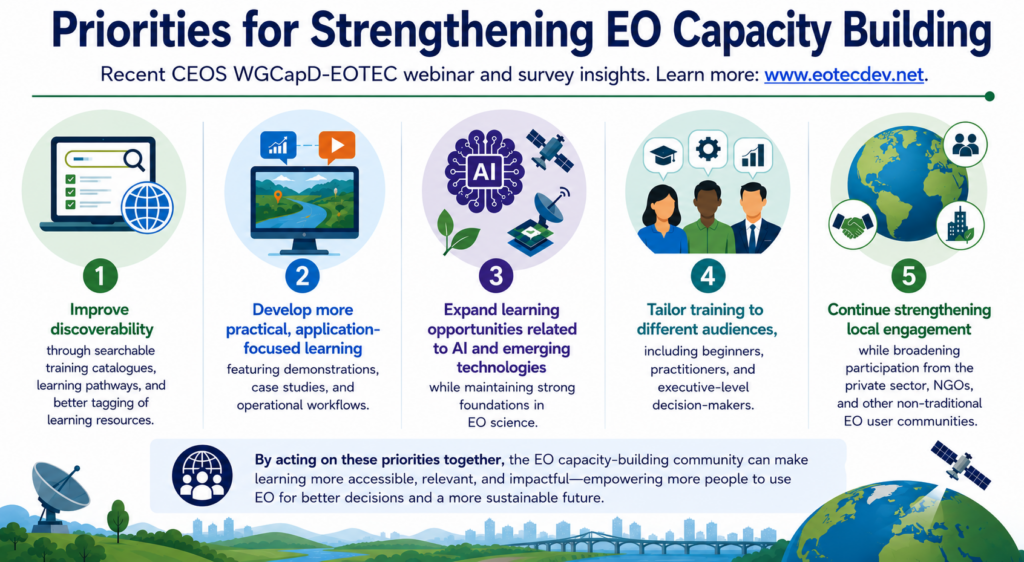
- The audience for EO capacity building is expanding. Earth observation is no longer used primarily by remote sensing specialists. Governments, businesses, humanitarian organizations, and many other sectors increasingly require EO information, creating demand for learning opportunities designed for non-technical decision-makers.
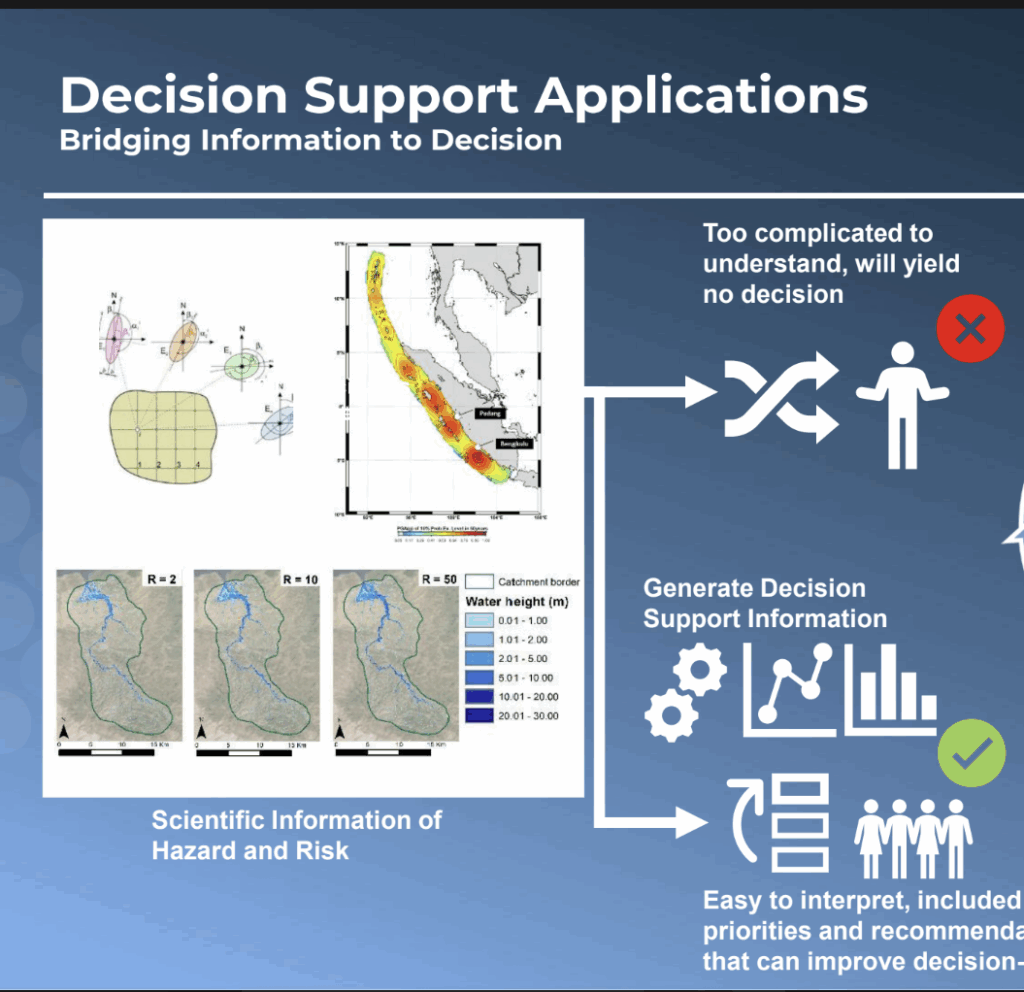
- Training is becoming more user-centered and application-focused. Rather than concentrating primarily on satellite data processing, capacity-building programs increasingly need to help users apply EO to solve real-world challenges, such as those in agriculture, disaster risk reduction, and environmental management. This is a key demand from private sector users.
- Different users require different learning pathways. One-size-fits-all training is not effective. Capacity development should reflect the distinct needs of policymakers, emergency managers, technical specialists, researchers, students, and private sector users. Training and skills-building must be tailored to the needs of each audience.
- Improving discoverability of EO training remains a priority. Participants highlighted that while many excellent EO learning resources already exist, they are often difficult to find. Better coordination, shared catalogues, and AI-enabled recommendation tools could help learners identify training that matches their experience, language, interests, and learning objectives.
- Artificial intelligence is reshaping EO capacity building while reinforcing the importance of foundational knowledge. AI can lower technical barriers, personalize learning, automate routine tasks, and improve access to EO information. At the same time, learners continue to need strong analytical, critical-thinking, and AI literacy skills to interpret information responsibly.
- While AI lowers technical barriers, it may produce outputs with varying levels of accuracy and confidence – which some users may not be able to assess or validate. There is a risk that users will rely on AI-generated outputs without fully evaluating their accuracy, uncertainty, or suitability for informing decisions. This is a risk across sectors as more decision-makers engage with EO.
- Proven approaches remain highly effective. Speakers highlighted the continuing value of face-to-face training, train-the-trainer programs, collaborative research, co-development, and peer-to-peer learning. AI and digital learning tools are not likely to never replace traditional approaches; in fact, they can help capacity builders become more productive and relevant – so long as they understand and address the limitations of the new technology.
- Partnerships remain central to building sustainable EO capacity. Collaboration among governments, academia, international organizations, and the private sector accelerates knowledge sharing, expands access to resources, and helps translate EO capabilities into operational services.
- International collaboration can accelerate national EO capabilities. Paraguay shared its experience building operational EO services through open satellite data, international partnerships, and public-private collaboration, demonstrating that countries can begin developing EO applications and human capacity before investing in sovereign satellite infrastructure.
- EO capacity building extends beyond technical expertise. Sustainable EO programs also require knowledge of computing infrastructure, data governance, maintenance, ethics, and open science, together with essential workplace skills such as communication, collaboration, critical thinking, and problem-solving.
- Success should be measured by real-world impact. Effective capacity-building programs should evaluate how learners apply their knowledge, strengthen institutional capabilities, and support better decisions—not simply how many people complete a course.
Presenters
- Welcome: Daniel Matsapola, Space Education Manager, South African National Space Agency (SANSA) and CEOS WGCapD Chair
- Moderator: Natasha Sadoff, NASA Earth Action Program Manager for Satellite Needs, ARSET, and EarthRISE
- Speakers:
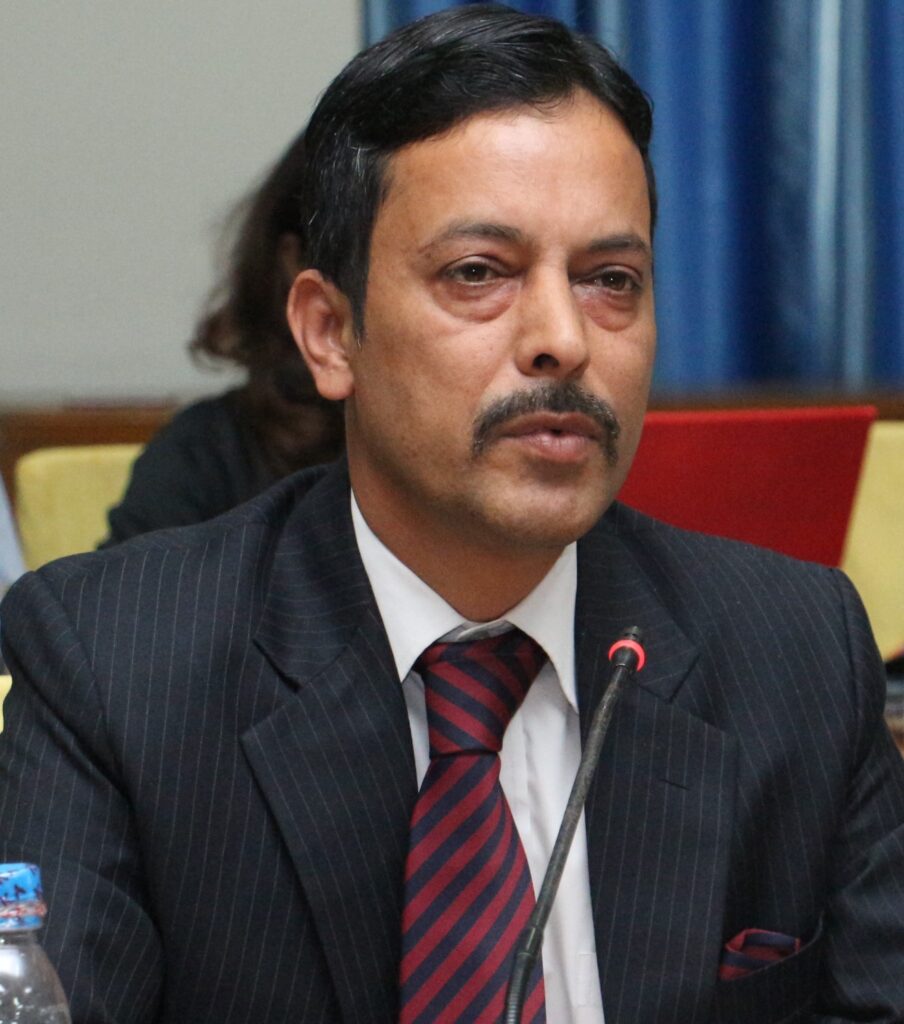
- Prof. Alejandro Román Molinas, Director General of Aerospace Development at the Paraguayan Space Agency (Agencia Espacial del Paraguay, AEP) and Co-Chair of AmeriGEO, Chair of the IAF ACCESS (Emerging Countries) Committee.
- Albert Anoubon Momo, Co-Founder of GeoDEV International, former Vice President and Executive Director at Trimble Inc., and former USAID/SERVIR lead
- Dr. Diana Chavarro-Rincon, Senior Project Officer, Faculty of Geo-Information Science and Earth Observation (ITC), University of Twente – EO AFRICA R&D Facility
- Robert Eckardt, CEO of Ignite Education.
Conclusion
The discussion concluded with a shared recognition that while Earth observation technologies continue to advance rapidly, the greatest opportunity lies in ensuring that people and institutions can use those capabilities effectively. As EO becomes integrated into a growing range of decisions and operational workflows, capacity building will continue to play a central role in translating Earth observations into meaningful societal benefits.
Next event: EOTEC DevNet hosts regional flood working groups July 8 and 9, focused on flash floods. Learn more and register for a calendar invite here.