Users Share Priorities for the Future of EO Capacity Building

What do Earth observation (EO) users see as the biggest challenges – and opportunities – for EO capacity building? Insights from more than 200 EO community professionals offer a valuable snapshot of how learning needs are evolving across sectors, regions, and user communities.
When registering for the June 17 webinar, Decision-Maker Perspectives on the Evolving Demand for EO Capacity Building, more than 200 people from 71 countries completed a short survey on EO learning needs and the challenges in accessing and applying EO knowledge. The respondents represented government agencies, academia, international organizations, training providers, and the private sector.
The webinar was jointly organized by the CEOS Working Group on Capacity Building and Data Democracy (WGCapD) and EOTEC DevNet.
[Webinar recording and presentation slides.]
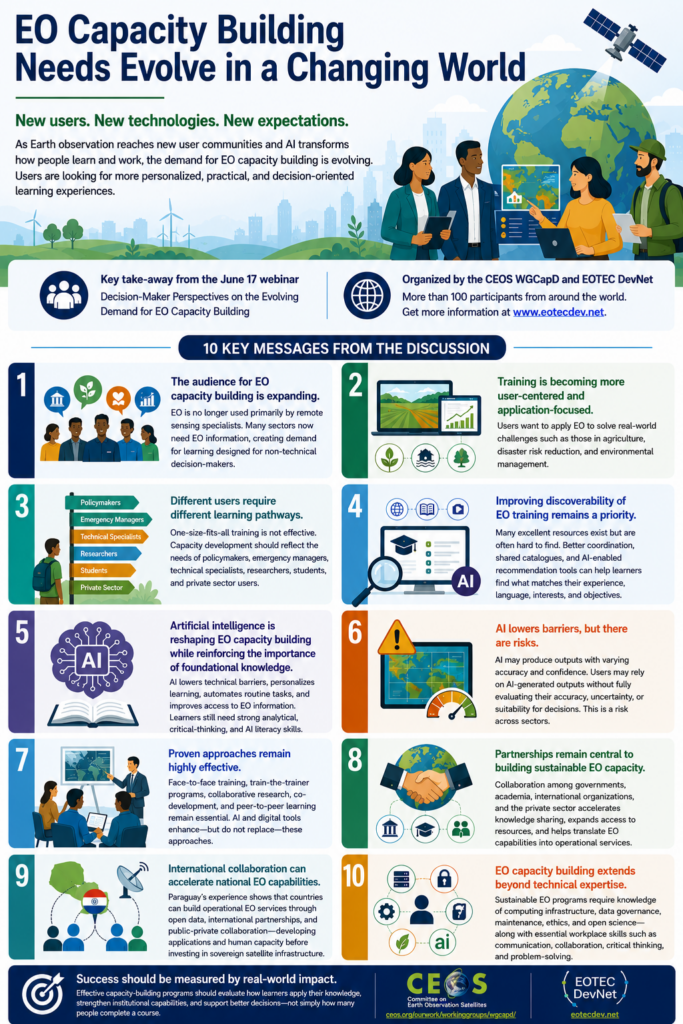
The survey insights complemented the webinar discussion, providing a snapshot of current user needs and priorities. The webinar brought together decision-makers and capacity-building leaders to explore what these trends mean for the future of EO learning. Taken together, the survey responses and webinar discussion suggest that the future of EO capacity building is not simply about providing more training, but about making learning easier to discover, more relevant to users’ needs, and better connected to real-world decision-making.
Government and Operational Users Are Driving Demand
The survey showed that EO capacity building is reaching a broader audience than ever before.
- Government organizations represented the largest participant group (35%), demonstrating growing demand for EO skills among public-sector decision-makers.
- Academia remained strongly represented (35%), alongside international organizations, training providers, and industry.
- Participants represented a diverse mix of roles, including technical specialists, capacity-building managers, trainers, students, and decision-makers.
- Registrants came from 71 countries, with particularly strong participation from Africa, followed by the Americas, Asia, and Europe.
Finding the Right Training Remains the Biggest Challenge
The survey suggests that the biggest barrier is not the availability of training – it is finding the right learning opportunity.
- 26% of respondents identified finding relevant training opportunities as their biggest challenge.
- Keeping pace with new technologies and matching training to user needs and skill levels were tied as the second most common challenge.
- Respondents also highlighted limited time and resources and a desire for more practical, hands-on examples.
- The findings reinforce the need for better discoverability, clearer course descriptions, and curated learning pathways.
Users Are Looking for Practical Skills in a Rapidly Changing Environment
Survey responses reflected growing demand for learning that helps users apply EO in modern operational environments.
- Users want support in keeping pace with AI, cloud computing, automation, and other emerging technologies.
- Respondents indicated that training should better match users’ experience levels and professional roles.
- There is increasing demand for practical, application-focused learning that can be directly applied in the workplace.
Webinar Discussion Added Important Context
The webinar panel and audience discussion helped explain why these trends are emerging.
- Panelists agreed that the core principles of Earth observation remain unchanged.
- The biggest shift is how EO information is accessed and applied, with growing use of cloud platforms, AI-enabled workflows, and integrated data ecosystems.
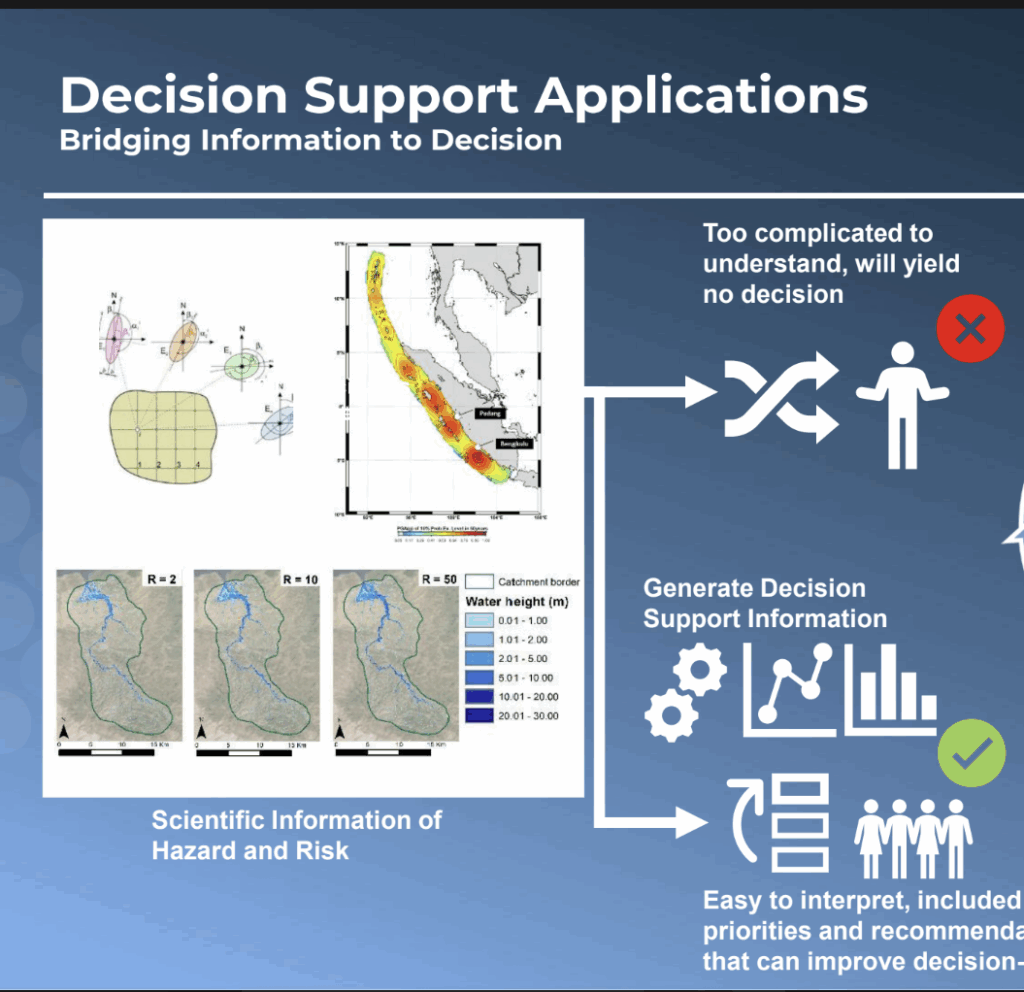
- Participants emphasized the importance of translating EO information into operational and policy decisions, not simply producing technical analyses.
- The discussion reinforced the need to balance strong EO fundamentals with emerging digital technologies.
Implications for the EO Capacity-Building Community
The survey and webinar point to several priorities for future action.
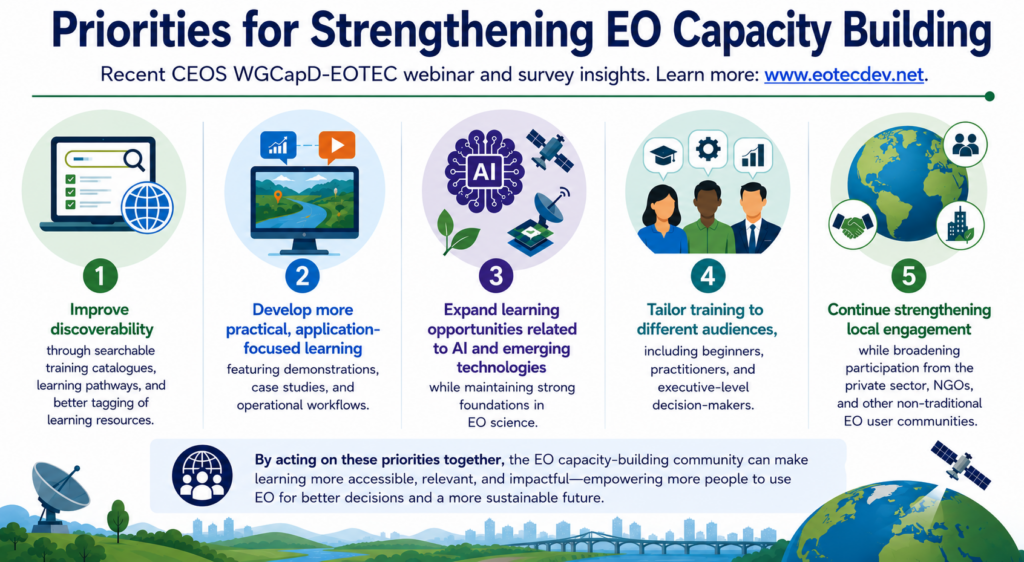
- Improve discoverability through searchable training catalogues, learning pathways, and better tagging of learning resources.
- Develop more practical, application-focused learning featuring demonstrations, case studies, and operational workflows.
- Expand learning opportunities related to AI and emerging technologies while maintaining strong foundations in EO science.
- Tailor training to different audiences, including beginners, practitioners, and executive-level decision-makers.
- Continue strengthening engagement in Africa while broadening participation from the private sector, NGOs, and other non-traditional EO user communities.
Next event: EOTEC DevNet hosts regional flood working groups July 8 and 9, focused on flash floods. Learn more and register for a calendar invite here.