In the U.S. Pacific Northwest, a potent atmospheric river in early December spawned waves of heavy rainfall that spurred landslides and flooding.
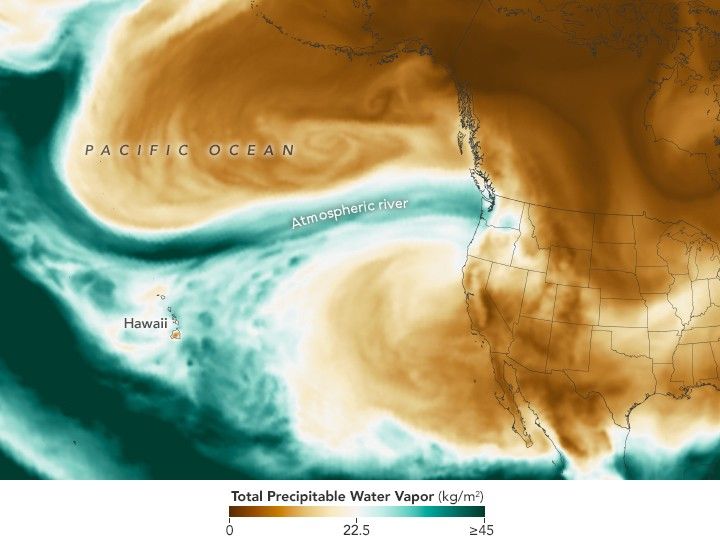
This image shows the total precipitable water vapor in the atmosphere at 11:30 p.m. Pacific Time on December 10. It is derived from NASA’s GEOS (Goddard Earth Observing System) and uses satellite data and models of physical processes to approximate what is happening in the atmosphere.
Atmospheric rivers are long, narrow bands of moisture that move like rivers in the sky, transporting water vapor from the tropics toward the poles. They occur around the planet, most often in autumn and winter, with the U.S. West Coast typically affected by moist air that originates near Hawaii. In this event, however, some of the moisture arrived from even farther away, originating roughly 7,000 miles (11,000 kilometers) across the Pacific from near the Philippines.
Read more: https://science.nasa.gov/earth/earth-observatory/pacific-moisture-drenches-the-u-s-northwest/